
Sustainability
We believe in taking responsibility
Sustainable logistics initiatives remain an environmental issue worldwide. We actively seek ways to leave the lightest possible imprint on the planet while continuously managing our operations to build a sustainable operating environment.
No matter where we are located in the world our commitment to sustainability, safety, health and the environment has been, and continues to be, a fundamental element of our operating practices and success to date. While our initiatives vary from country to country to achieve the greatest impact, we remain committed to these projects and to expanding them where practicable.
We are committed to exceeding minimum environmental standards where practicable. Our commitment to sustainability involves concerns for both natural and developed environments, and for the effective and economically and environmentally efficient use of resources.
We have always attempted to reduce the environmental impact of our operations. Our sustainability initiatives have often resulted in reduced costs; so the bottom line and the environment are both winners.
Climate change remains an issue for businesses and governments everywhere. For Mainfreight it begins with accepting that our business is based on an activity that generates carbon emissions and therefore taking responsibility to reduce those emissions over time while maintaining our competitiveness and ability to deliver quality services as our customers expect. We measure the carbon emissions we generate across our global operations.
We continue to lobby for the ability to move more domestic freight by rail particularly throughout New Zealand and Australia, because the simple fact is trucks emit 4.6 times more CO2 per tonne km carried than trains. It is critical for the wealth and productivity of all countries that rail services improve not only to reduce carbon emissions but also to improve the efficiency of their domestic transport infrastructures.
We have put together a Sustainability Overview, in which we have reported on economic, environmental, social and governance topics that Mainfreight believes are material to its business and the communities it operates in. Click here to access the online reader version
Sustainability and environmental management
Our People
- Team Health and Wellness programs
- Ensuring living wages for entry level roles
- Team leadership development with our own Outward Bound and Main Divide programs
- Tertiary scholarships for family of Mainfreight team members
- Creating safe, healthy and inclusive workplaces
Our community
- Major sponsor of Books in Homes.
- Volunteering and community days organised by our local teams across the country.
- Each year more Mainfreight team members take part in Run for the Kids which raises money for the Royal Children’s Hospital Good Friday Appeal.
- Support for local schools, charities and community organisations across the communities where we operate.
Our Economy
- Youth work skills training programme
- Increasing rail capability and capacity to reduce road congestion and heavy traffic
- Investing in intermodal and rail-connected infrastructure to improve freight efficiency and reduce transport emissions
- Supporting more efficient freight movements through strategically located transport and logistics facilities
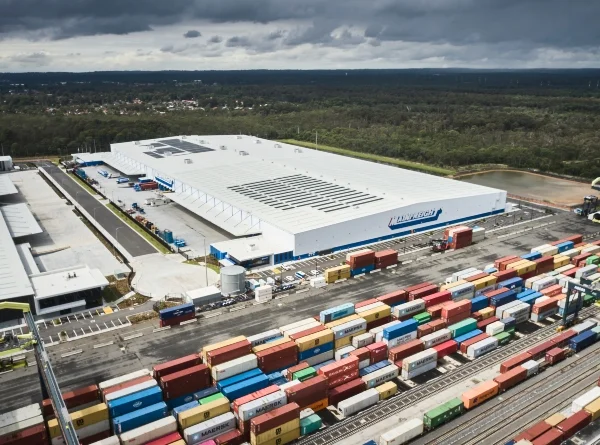
Sustainability across our network
We’re investing in smarter infrastructure and practical solutions to reduce our environmental impact, from renewable energy and electric equipment to rail capacity, water recycling and waste reduction. Some of the initiatives already in place across our network include:
- Across our operations, installed solar capacity exceeds 12MW, battery storage exceeds 11.8MWh, and over 89% of material handling equipment is electric.
- Modern fleet (all <10 years old) predominantly Euro 5 and 6 vehicles
- Major infrastructure investment in rail capacity with rail sided sites across our network.
- 15,000,000 Litres of rainwater capture and storage at all major sites.
- Grey water recycling at all major sites for truck wash, sprinkler systems etc
- Repurposing waste like pallets (into furniture or stowage aids)
- Waste exchange agreements to redirect waste from landfill for shrink-wrap and polystyrene
- Hungry bins, on site composting and branch gardens
- 62% of our small vehicle fleet (team cars) are hybrid and electric along with 71% of our owned branches having onsite charging stations
- Progressing trials and explorations of electric truck opportunities across all regions
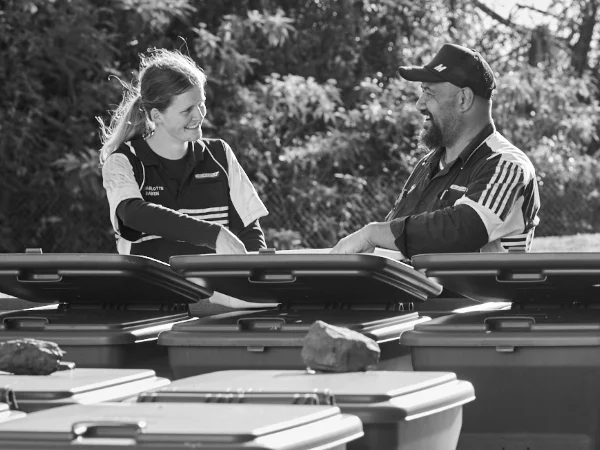
Our operational programs and initiatives around sustainability
- Preparing our Annual Report with Reference to the GRI Standards. You can download our report from our Reports Library
- Verifying our GHG Emissions Inventory to ISO 14064-1:2018 by Toitū Envirocare from 2018 to 2025, and to GHG Protocol by EY from 2026. You can see our previous emissions reports in our Reports Library
- Mainfreight are a Smart Freight Centre Member. We support and follow their framework to measuring supply chain emissions
- We continue to develop our GHG emissions reporting tools for customers. We can provide an accurate inventory of their supply chain emissions, from local deliveries through to international shipments
- Mainfreight have our own domestic emission factors in New Zealand, peer reviewed previously by Toitū Envirocare (2018-2025), and currently by EY (2026 onwards)

Our Greenhouse Gas Emissions
We welcome the opportunity to present our global emissions inventories. Through our emissions reporting, Mainfreight continues to demonstrate best practice and reinforce its commitment to better understanding and improving its operational carbon emissions performance.
Our inventories cover Scope 1, Scope 2 and material Scope 3 emissions and are prepared using an operational control approach. It is our belief that if we can exercise reasonable influence over an emissions source then we must include it. As a result we incorporate emissions from vehicles operated by owner drivers and agents, rail providers, shipping lines and airlines that support our service offering to customers.
Mainfreight has been reporting independently verified greenhouse gas emissions since 2018, providing greater transparency and helping our customers better understand the environmental impact of their supply chains.
For full details and wider explanation of our emissions inventories, please refer to our Greenhouse Gas Inventory Reports below.
Sustainability and Information Technology
Reducing the environmental impact of IT infrastructure is important. Our data centres in New Zealand, Australia and the United States of America are as energy efficient as possible through initiatives including:
- Minimising computer room space to minimise cooling requirements
- Installing efficient cooling systems
- Using virtualisation to reduce hardware required, - and heat generated – Mainfreight currently runs 48 major applications across only 12 physical servers
- Using hardware with variable energy management systems – running at full capacity only on an “as needed” basis
Future Sustainability Developments and Leadership
Mainfreight is actively committed to sustainability and environmentally friendly practices. Mainfreight will develop partnerships in the wider community to promote socially responsible environmental practices and show leadership in managing the use of finite resources.
Mainfreight’s commitment to sustainability, safety, health and the environment has been, and continues to be, a fundamental element of our operating practices and success to date.